Infection Control in Premises
Infection Control in Premises
How infection control works in real premises: a written plan, rules and signage for customers, and a fair policy for staff sickness and return to work.

Infection control in a real premises is less about equipment than about decisions. Who owns the routine, which surfaces get attention, what happens when someone is unwell and what customers are told. This section covers the three pillars that hold those decisions together, in the order most small businesses find easiest to work through.
The three pillars
The first pillar is a written plan: one page, one lead, a ranked list of touch points and a review date. The second is the set of rules and notices that customers meet, which should be short, specific and placed where the decision is made. The third is the staff sickness policy, which decides whether people can report honestly. Get these three right and the daily cleaning and ventilation routines fall into place around them.
The plan
A plan is not a manual. It names who is responsible, where the risks are and when the work happens, and it lives where the work is done. Our guide to a small business infection control plan walks through five steps that can be finished in an afternoon, from mapping the space to a monthly review. It is the best place to start if you have nothing written down yet.
Rules and signage
Customers cannot see your cleaning routine, so the only rules that reach them are the ones you write down. Keep to three messages per notice, write actions rather than appeals, and place each notice where the behaviour happens. Our guide to customer rules and signage covers wording, placement, readability and how to handle more than one language.
Staff sickness
A fair sickness policy protects the team and the customers at the same time. It sets out when to stay home, who to tell, how the shift is covered and when to return, and it keeps health information private. Our guide to staff sickness and return to work explains why a written rule beats a judgement call and how to make the policy fair enough to be followed.
How the articles fit together
Read the plan guide first, because it gives you the frame. Then choose between the signage guide, if your main gap is what customers do, and the sickness guide, if your main gap is what happens when a staff member is ill. Most sites need both eventually, but starting with one keeps the work manageable. The routines that support the plan, such as cleaning and ventilation, are covered in the next section.
What good looks like
A good premises has a one-page plan on the wall, a short notice at the point of decision, a sickness rule the team has actually read, and a lead who reviews the whole thing once a month. None of it requires new equipment, and all of it can be built from what is already in the building. The value comes from deciding in advance, so the busiest hour is not also the moment of judgement.
A monthly rhythm
The three pillars only work if they are reviewed. Put one date in the month, ideally the same date each time, and spend twenty minutes on three questions: which task was missed, which supply ran out and what has changed in the layout or the team. Write the answer down and change one thing. A pillar that is reviewed once a month stays alive; one that is written and filed becomes a decoration.
Keep the review short and specific. It is not a meeting about infection in general, but a check of a list. If nothing was missed and nothing changed, the review takes two minutes and that is a good result. The habit of looking is what protects the business, not the length of the notes.
Common mistakes
The same few mistakes appear in small businesses again and again. The plan is written but never placed where the work happens. The notice is worded as an appeal rather than an action. The sickness policy is understood by the owner but has never been read by the team. Cleaning is done thoroughly once a week instead of briefly every day. Each of these is easy to fix and each quietly undoes the others.
Another common mistake is treating infection control as a project with an end. It is a routine, and routines need a rhythm. When the urgency fades, the businesses that keep the habits are the ones that built them into opening and closing, rather than adding them as extra tasks that could be dropped.
Training a new starter
New staff learn the routine from what they see, not only from what they are told. Spend ten minutes on the first day walking through the plan, the notice at the door and the sickness rule, and show where the supplies are kept. Ask them to repeat the key points back. A short induction is the cheapest way to keep a routine alive across staff changes, and it also tells you whether the plan is still clear enough for someone seeing it fresh.
The order matters less than starting. Whatever pillar you choose, give it a date and a name, and come back to it in a month.
Start with one pillar
Look at the three pillars and pick the weakest. If you have no written plan, start there. If customers ignore your notices, start with signage. If a sickness case recently caused confusion, start with the policy. One pillar improved this week is worth more than three planned for later.
Infection Control in Premises
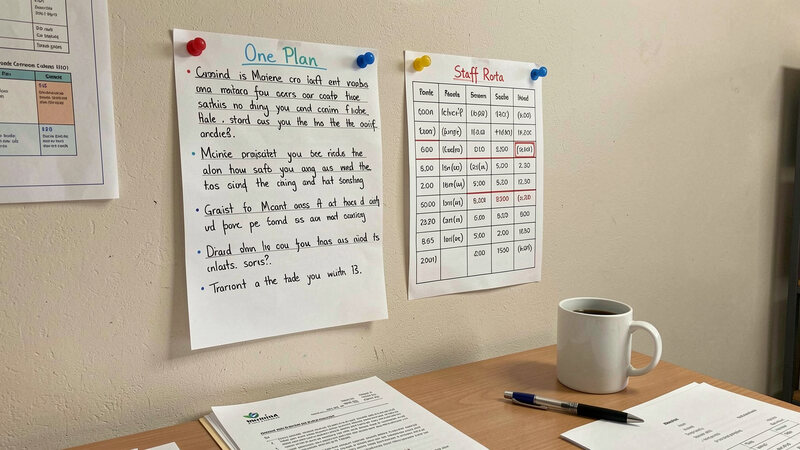
A Small Business Infection Control Plan
Build a one-page infection control plan for a small business: name a lead, map the space, set cleaning and air routines, brief staff and review monthly.
One page, one lead, five steps.
Infection Control in Premises
Customer Rules and Signage
Write customer rules and signage people actually follow: keep it short, put it where the decision is made, use plain words and update it when things change.
Readable notices placed where the decision is made.
Infection Control in Premises
Staff Sickness and Return to Work
Set a fair staff sickness policy: when to stay home, how to report, who covers the shift, when to return, and how to keep records without overreach.
A fair rule written before it is needed.