Air, Cleaning and Hygiene
Ventilation in Small Spaces
Improve ventilation in small rooms with cross-flow windows, a fan placed low, short regular airing and a simple carbon dioxide check when it matters.
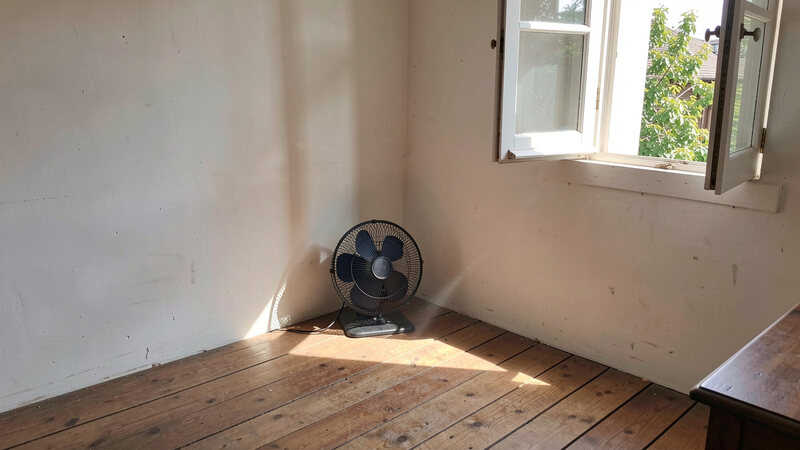
Ventilation is the cheapest infection control measure most premises have, and the one most often abandoned. It needs no special equipment, only openings and a little routine. The aim is simple: replace stale indoor air with fresh air so that anything suspended in it is diluted. This guide explains how to do that in a small room, including the awkward cases where there is only one window.
Why air matters indoors
In a closed room, the air is shared by everyone in it. Fine particles released by breathing, speaking and coughing build up over time and spread through the space. Opening the room to fresh air lowers that build-up, which lowers how much anyone breathes in. Ventilation does not replace cleaning or hand hygiene, but it works on a route the other measures cannot reach.
The effect depends on flow, not on a single dramatic airing. A room that is aired briefly and then sealed again returns to its previous state within minutes once people are talking in it. Think of ventilation as something that runs while the room is occupied, rather than an event that happens before it opens.
Cross flow with two openings
The most effective method is cross flow: open windows or vents on two different sides of the room so air enters one and leaves the other. A window at the front and a door or window at the back creates a path straight through the space. The wider the openings and the straighter the path, the more air moves.
Even a partly open door helps. If both openings are on the same wall, the flow is weaker but not useless, because warm air rises and cooler air falls, producing some exchange. Where possible, choose openings on opposite walls and keep the path clear of furniture that blocks the current.
When there is only one window
A single window can still ventilate a room. Place a fan near the opening and aim it outwards, so it pushes indoor air outside and draws fresh air in around the edges of the same opening. Aiming the fan into the room does the opposite: it stirs the air but removes little of it. A second small fan placed low, pointing towards the window, can strengthen the effect.
If the window opens only a little, a short burst of wider opening when the room is empty between groups of customers can help. In small spaces, the difference between one opening and none is larger than the difference between one and two.
Using fans and purifiers
A fan is a tool for moving air, not just for cooling people. Positioned to push air out of an opening, it improves exchange. Positioned to blow directly at people for long periods, it can spread a plume from one person towards another and cause discomfort, so aim it at the room's air rather than at faces.
Air purifiers with a suitable filter can reduce particles where ventilation is limited, such as a windowless room. They work best when sized for the room and left running while it is occupied. Treat a purifier as a supplement to fresh air, not a replacement for it.
How much and how often
The right amount depends on the size of the room, the number of people and the size of the openings. As a working rule, air the room briefly and often, and increase the frequency when it is crowded or when people are talking or singing. In winter, several short airings keep the room warmer than one long one and are easier to keep up.
Where mechanical ventilation exists, check that it is drawing fresh air in and not simply recirculating. Clean or replace filters on schedule, because a clogged filter quietly reduces the flow that the system was designed to provide.
Checking that it works
You do not need instruments to tell whether air is moving. A tissue or a light curtain near an opening will flutter if there is flow. A stuffy smell, condensation on windows or a room that feels stale after an hour are signs that exchange is too low. A carbon dioxide monitor gives a clearer picture: a rising reading in an occupied room means the air is being reused more than it is being replaced, which is a prompt to open up or increase the flow.
Winter and summer
In winter, cold draughts push people to close everything, so plan for it. Open one window rather than several, keep the heating on, encourage warmer clothing and air the room briefly and repeatedly. In summer, air conditioning and open windows work against each other, so air in short bursts and accept a small loss of cooling. The habit to protect is the ventilation itself; the comfort measures are secondary.
Rooms with no window at all
A windowless room is the hardest case, but it is not hopeless. Keep the door open where it leads to a ventilated space, and use a fan to move air through the doorway. An air purifier with a suitable filter, sized for the room and left running while it is occupied, reduces particles when fresh air is not available. Keep the time people spend in the room short where possible, and treat any opening you can create as worth using.
Start with one room
Pick the room where people spend the most time together. Open two openings on opposite sides, or set a fan to push air out of the single window, and keep it going while the room is used. Check the flow with a tissue, and repeat the routine tomorrow. Ventilation becomes easy once it is part of opening and closing, like switching on the lights.